Temp Mail No Signup
Tired of spam clogging your primary email? Temp mail no signup services provide a instant, anonymous email address for any situation where you need to verify an account or receive a file without giving away your real contact info. It’s the simplest, fastest way to shield your privacy online with zero commitment or registration required. Just visit a site, copy the address, and use it—then forget it.
Key Takeaways
- Instant Access, Zero Friction: You get a working email address in seconds with no forms to fill out, no passwords to create, and no personal details to provide.
- Primary Inbox Protector: Its core job is to act as a sacrificial buffer, catching spam, promotional emails, and potential data leaks away from your important personal or work accounts.
- Truly Temporary & Disposable: These addresses are designed for one-time or short-term use. They automatically expire after a set period (often 10 minutes to 1 hour), ensuring no long-term digital footprint.
- Enhanced Privacy & Anonymity: Since no signup occurs, there is no link between the temporary address and your identity, offering a high degree of anonymity for casual web activities.
- No Tracking or Forwarding Guarantees: Reputable services do not log your IP address or the content of emails, and they typically do not offer forwarding, ensuring the address dies with its purpose.
- Use Case Specific Tool: It is perfect for forum sign-ups, downloading gated content, accessing one-time promotions, or testing services, but never for important accounts like banking or primary logins.
- Self-Managed Lifecycle: You control when the address is “deleted” by simply closing the browser tab. The service automatically purges all emails and the address itself from its system after expiration.
📑 Table of Contents
- What Exactly is “Temp Mail No Signup”?
- How Does It Work? The Magic Behind the Curtain
- The Undeniable Benefits: Why You Should Use It
- Perfect Use Cases: When to Reach for Temp Mail
- How to Choose a Reliable “No Signup” Service
- The Critical Risks and Limitations You Must Know
- Best Practices for Safe and Effective Use
- The Future of Ephemeral Communication
- Conclusion: Your Digital Disposable Shield
What Exactly is “Temp Mail No Signup”?
Let’s cut through the jargon. “Temp mail no signup” describes a specific type of disposable email service that removes every single barrier between you and a temporary inbox. Imagine needing a quick email to download a PDF or sign up for a website you’ll probably never use again. Normally, you’d sigh, pull out your real email, and brace for the spam. But with a no-signup temp mail service, you don’t even have to think about creating a new account. You go to the website, and an email address is already there, generated for you, ready to copy and paste. That’s it. No “Create Account” button. No username and password fields. No CAPTCHA puzzles (sometimes). No “I agree to the Terms” checkbox you never read. It’s email as a utility—as simple and impersonal as a public payphone.
This model is the purest form of a disposable email. It prioritizes your time and privacy above all else. The service provider makes money not from storing your data or selling premium plans to you, but typically from minimal, non-intrusive advertising on their site or from premium API access for developers. Your interaction is a single, anonymous session. You use the inbox, you leave, and the digital trace is designed to vanish. It’s the online equivalent of writing a note on a piece of paper, handing it to someone, and then watching both the paper and the message dissolve into nothingness.
The Core Philosophy: Anonymity Through Simplicity
The genius of the no-signup approach is that it eliminates the *act* of registration, which is itself a data-harvesting point. Every time you sign up for a “free” service, you are trading your email address (and often more) for access. That email address becomes a key that links all your future activity on that site back to you. With temp mail no signup, there is no key to link. The address is a random string of characters belonging to no one in the session. The service doesn’t ask, “Who are you?” because it doesn’t need to know. You are simply a user of a public resource. This philosophy directly combats the modern web’s default setting of “collect everything.” It gives you, the user, the power to interact without leaving a calling card.
How Does It Work? The Magic Behind the Curtain
The process is so straightforward it feels like magic, but it’s just smart, lightweight engineering. Here’s the step-by-step breakdown of what happens when you visit a temp mail no signup site.
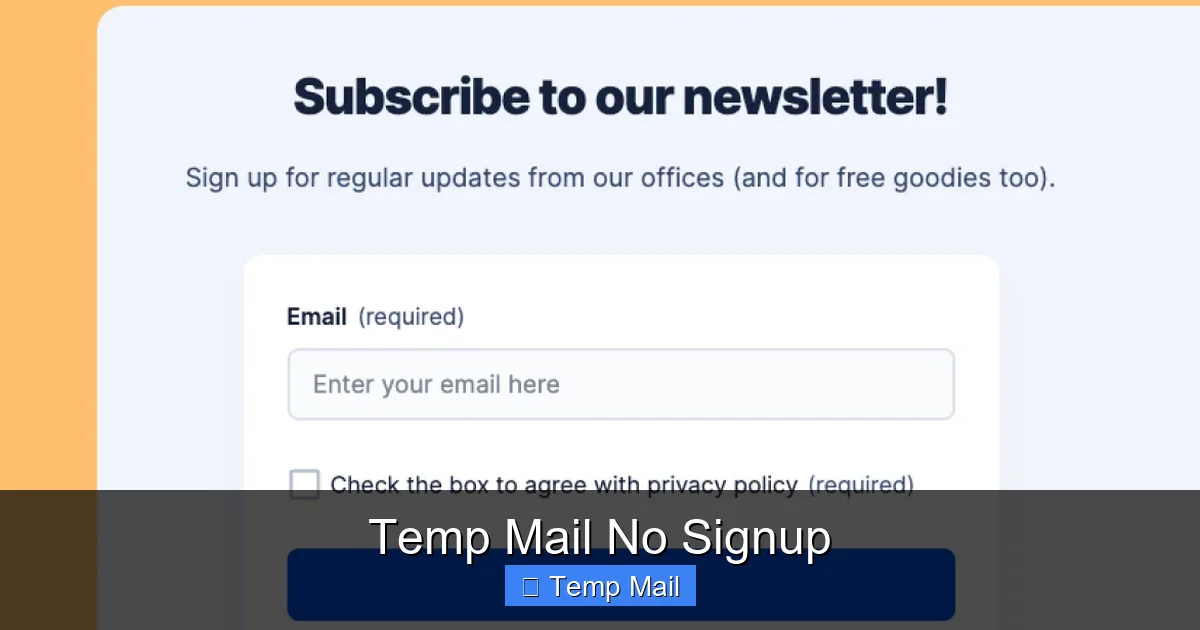
Visual guide about Temp Mail No Signup
Image source: images.ctfassets.net
Step 1: Instant Inbox Generation
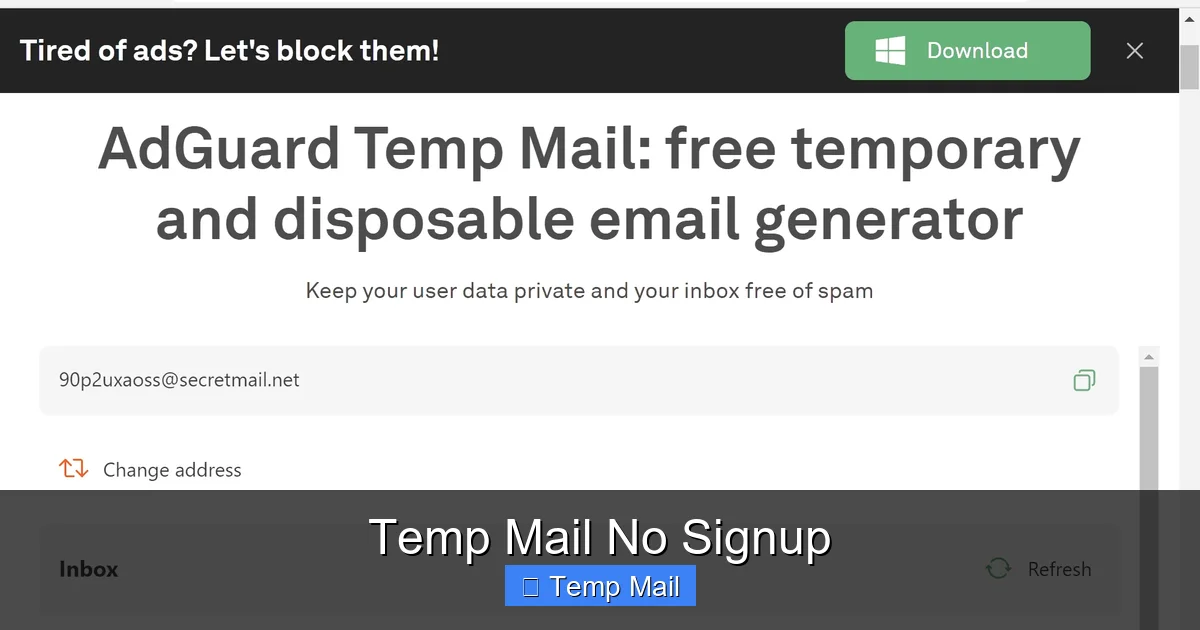
As soon as the webpage loads, the backend system automatically generates a unique, random email address. This address is typically a jumble of letters and numbers at a dedicated domain owned by the service (e.g., xyz123@tempmail.demo). This address is instantly reserved in their system for your browser session. It’s not pre-created and sitting in a database waiting; it’s born the moment you arrive.
Step 2: The Public Inbox Interface
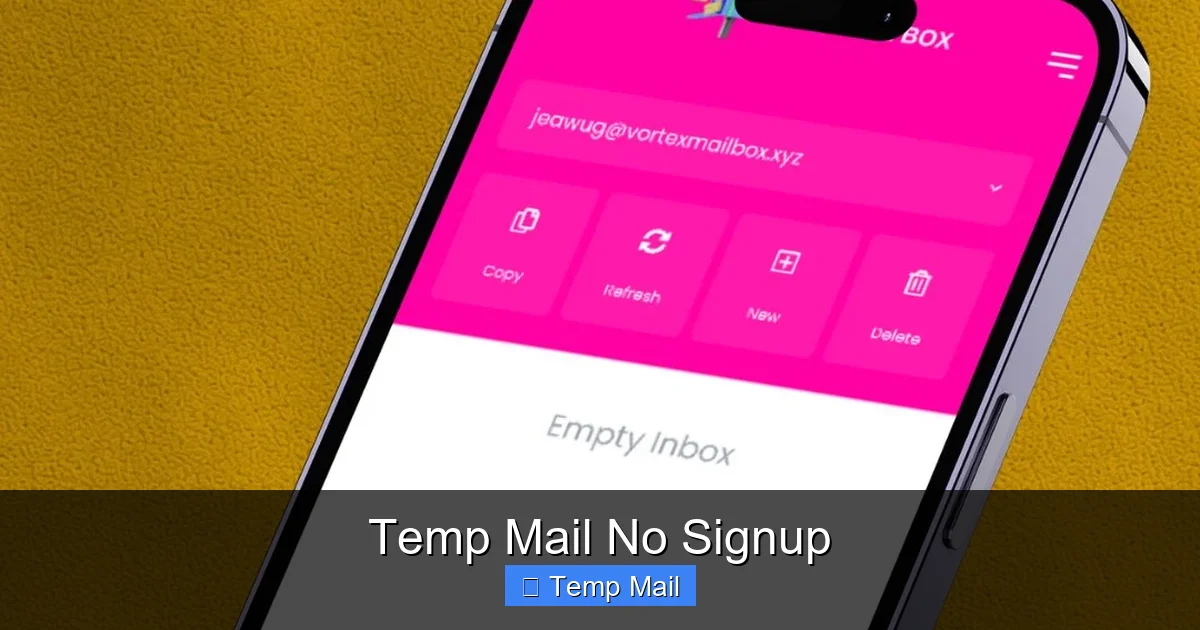
You see a clean screen. At the top, your freshly minted email address is displayed prominently with a “Copy” button next to it. Below that is an empty inbox frame. This frame isn’t connected to a persistent database tied to your identity. It’s a real-time view into a mailbox that exists only for that specific, randomly generated address. The website uses your session (often tracked via a temporary cookie or session ID) to show you *only* the emails sent to *your* random address.
Step 3: Using the Address
You click “Copy,” then navigate to the website or service that requires an email. You paste the temp address into the sign-up or verification field and proceed. When that service sends a confirmation email or a download link, it routes to the temp mail service’s mail servers. The service receives it, stores it temporarily in the queue for that specific random address, and makes it visible in the inbox interface you have open.
Step 4: The Ephemeral Lifecycle
This is the critical part. The service runs on aggressive, automated cleanup cycles. Every few minutes, the system scans for expired addresses. Once an address is past its designated lifetime (usually 10, 30, or 60 minutes from creation), the service permanently deletes the address from its active pool and wipes any emails associated with it from its servers. Your browser session loses access. If you refresh the page after expiration, you’ll get a brand new, different random address. The old one is gone forever. There is no “account” to delete because there was never an account to begin with.
The Undeniable Benefits: Why You Should Use It
Using a temp mail no signup service isn’t about being paranoid; it’s about being a smart, efficient digital citizen. The benefits stack up quickly.
Visual guide about Temp Mail No Signup
Image source: ghacks.net
1. Slay the Spam Dragon Before It Hatches
This is the number one reason people use disposable email. Every time you use your primary email for a one-off sign-up, you’re giving that company permission to email you, and often, to sell or share your address with partners. That single sign-up can lead to years of promotional clutter. Temp mail creates a dead-end for that traffic. The verification email arrives, you use the link/code, and then the address expires. The spam has nowhere to go. It’s a pre-emptive strike on inbox clutter.
2. Fortify Your Privacy and Anonymity
Your email address is a primary identifier. It’s used for login recovery, targeted advertising, and data brokering. By using a temp address for low-stakes interactions, you prevent those services from even having your identifier in the first place. There’s no profile to build, no behavior to track back to *you*. This is crucial for browsing on public computers, accessing sensitive information on forums, or simply maintaining a separation between your online hobbies and your real identity.
3. Save Precious Time and Mental Energy
Think about the alternative: creating a new “junk” email account with a provider like Gmail or Outlook. That involves choosing a username (which is likely taken), inventing a password, verifying a phone number (another data point!), and bypassing security setups. It takes 2-5 minutes of focused work. A temp mail no signup takes 5 seconds. That time saved adds up. It removes the friction that often leads people to just sigh and use their main email “just this once.” That “just this once” is how spam lists grow.
4. Bypass Unnecessary Account Creation
The modern web is riddled with “account wall” tactics. Want to read an article? Create an account. Want to download a whitepaper? Create an account. Want to see a price list? Create an account. Many of these are pure lead generation. Temp mail lets you politely decline this data exchange while still accessing the content you need. You get the resource, they get a fake email that bounces later, and you skip the marketing drip campaign. It’s a fair, if lopsided, transaction.
5. Test and Verify Without Commitment
Are you a developer testing an app’s email workflow? A marketer checking if a lead magnet email deliverability works? A regular user trying out a new SaaS tool? Temp mail is the perfect tool for the job. You can trigger the email system, see the content and formatting, and verify the link works, all without contaminating your real inbox or creating a permanent user profile in the test system. It’s a sandbox for email reception.
Perfect Use Cases: When to Reach for Temp Mail
Knowing *when* to use this tool is as important as knowing how. Here are the prime scenarios where temp mail no signup shines.
Visual guide about Temp Mail No Signup
Image source: image.winudf.com
Downloading Gated Content
This is the classic. A blog offers a valuable ebook, template, or checklist in exchange for your email. You want the resource, not necessarily a relationship with the company. Use the temp address, get the download link (most services forward links in the email body), and download. The address expires before any follow-up “nurture” emails can land.
Signing Up for One-Time Access or Trials
Need to create a quick account to post on a forum once, comment on a news site, or start a 7-day trial of a software you’re evaluating? Use temp mail. For trials, be aware that some paid services may attempt to verify email authenticity more rigorously, but for most casual trials and forum sign-ups, it works perfectly.
Accessing Wi-Fi or Public Services
Many airports, hotels, or cafes require an email address to sign up for their Wi-Fi portal. This is a perfect low-risk use. You get online, and the promotional emails from the venue go to an address that will vanish in an hour.
Protecting Your Identity on New Platforms
When exploring a new social network, gaming platform, or app that you’re unsure about, use temp mail for the initial sign-up. If the platform turns out to be sketchy, spammy, or has a data breach, your real email is safe and sound. You haven’t given them a key to your digital identity.
Bypassing “Email Required” on Untrusted Sites
If a website feels even slightly dubious—poor design, too many pop-ups, aggressive claims—and it demands an email to proceed, trust your gut and use a temp address. It’s a simple firewall against potential phishing or malware distribution attempts that rely on collecting valid emails.
How to Choose a Reliable “No Signup” Service
Not all temp mail services are created equal. The “no signup” feature is a great start, but you need to consider a few factors for a smooth experience.
Inbox Refresh Speed and Display
The best services update your inbox view automatically or with a simple manual refresh button. You shouldn’t have to wait 30 seconds to see a verification email arrive. Look for a clean interface where the inbox list and email body are clearly visible. Some services load the email content in the same window; others open it in a new pane. Find what’s intuitive for you.
Address Expiration Time
Check the service’s policy. Is the address good for 10 minutes? 30 minutes? 1 hour? For most use cases (receiving a verification code), 10-15 minutes is sufficient. If you need more time to access a download link that might be sent later, a 1-hour window is better. Know the clock so you don’t lose access unexpectedly.
Domain Reputation and Blockage
This is a big one. Some websites and services actively block known disposable email domains to prevent abuse. If your temp mail domain (the part after the @) is on a blacklist, the service you’re trying to sign up for will reject the address outright. If you encounter this, simply try a different temp mail provider. They use different domains. A reliable service will often offer multiple domain options to help you bypass these blocks.
Ad Experience and Malware Risk
Since these are free services, they display ads. Be cautious. A good service has static, non-intrusive ads (like banners on the side). A bad service will have pop-ups, misleading “Download” buttons that are actually ads, or redirects. These can be vectors for malware. Stick to well-known, established providers in this niche. Your browser’s pop-up blocker is your friend here.
No Forwarding, No Reply
Understand the limitation: you cannot *send* email from a temp address, and you cannot *reply* to emails received. The address is a one-way street, designed solely for you to receive a specific piece of information. If a service requires you to reply to confirm something, a temp address won’t work. This is by design for security and simplicity.
The Critical Risks and Limitations You Must Know
Temp mail is a powerful tool, but it has clear boundaries. Using it incorrectly can lead to real problems.
It is NOT for Important Accounts (Ever)
This cannot be stressed enough. Never, ever use a temporary email for: banking, primary email recovery, social media main accounts, government services, school/college portals, or any service where account recovery is vital. If the service emails a password reset link and the address is gone, you are permanently locked out. Your “temporary” convenience becomes a permanent loss. These accounts must always be anchored to a real, permanent email you control.
No Account Recovery, Period
Linked to the above: if you forget your password for a service you signed up with a temp email, you cannot recover that account. The service will send the reset link to an address that no longer exists. The account is dead. Accept this trade-off before you use the temp address.
Potential for Service Blacklisting
As mentioned, some proactive websites block entire ranges of disposable email domains. You might find that a specific temp mail domain is rejected at the sign-up form. This isn’t a bug; it’s a feature for the website owner trying to reduce fake sign-ups. The solution is to try a different temp mail provider that uses a different domain.
Attachment Limitations
While most services allow you to receive attachments (like a PDF or image), there are often strict size limits (e.g., 10MB, 25MB). Very large files will be rejected by the temp mail server. For large downloads, the service will often provide a direct download link *within* the email body text, which you can click. That link is usually separate from the attachment itself.
Ethical and Legal Boundaries
Using temp mail to evade bans on forums, to create fraudulent accounts, to send spam, or to engage in any illegal activity is, of course, wrong and often illegal. The anonymity is for *privacy*, not for *malice*. Use it to protect your primary inbox from unwanted commercial noise, not to hide malicious intent. Remember, while the service may not log your IP, the websites you visit *will* log the IP address used at the time of sign-up.
Best Practices for Safe and Effective Use
To get the most out of temp mail no signup while staying safe, follow these simple habits.
Always Have Your Primary Email Ready
Keep a tab open with your real email. When you use a temp address for a trial or sign-up, immediately set a calendar reminder for 2-3 days before the trial ends. Use that reminder to log in (if you still have the credentials) with your temp email, navigate to account settings, and **change the email address to your primary one** before the trial converts to a paid plan or before you lose access to the account. This migrates the account off the temporary address.
Use a Different Temp Address for Different Purposes
Don’t reuse the same temp address for multiple unrelated sites. While they all expire, using a fresh address for each new service creates cleaner separation. If one address starts getting a lot of spam (unlikely due to short life), it doesn’t matter because it will die soon anyway. But conceptually, it keeps your “temp mail sessions” distinct.
Check the Inbox Immediately and Regularly
Verification emails can sometimes land in the spam folder of the temp service itself (rare, but possible). After submitting the temp address, stay on the temp mail site and refresh the inbox every 15-30 seconds for a few minutes. Don’t navigate away, or you might miss the window. Once you get the needed code/link, you can leave.
Never Use It for Professional or Academic Identity
If you are applying for a job, submitting academic work, or corresponding with a client, your temp mail looks unprofessional and can cause communication breakdowns. In these contexts, a real, checked-regularly email is a mark of reliability. Reserve temp mail for the background noise of the internet, not for your core professional identity.
Close the Tab When Done
While the address expires on its own, simply closing the browser tab ends your session. It’s a good habit to physically close it once you’ve copied the verification code or download link. This reinforces the temporary nature of the action in your mind and prevents accidental reuse later.
The Future of Ephemeral Communication
The rise of no-signup temp mail is a symptom of a larger shift. Users are increasingly aware of the data economy and are seeking tools that offer utility without the hidden cost of personal information. We’re seeing this trend in other areas: privacy-focused search engines, VPNs, and browsers. Temp mail fits perfectly into this “minimal viable interaction” philosophy. As email-based spam and phishing continue to be primary attack vectors, and as data privacy regulations like GDPR and CCPA give users more rights (and awareness), the demand for simple, anonymous, disposable communication channels will only grow. Future iterations may include browser extensions that generate these addresses on the fly in form fields, or deeper integration with password managers. The core principle will remain: your primary identity should be protected by a moat, and disposable addresses are the perfect moat fillers for the daily siege of web forms.
Conclusion: Your Digital Disposable Shield
Temp mail no signup is not a silver bullet for all your email problems, but it is an exceptionally effective tool for a specific and very common set of problems: spam prevention, privacy protection, and frictionless access. Its power lies in its utter simplicity and anonymity. By understanding its mechanics—instant generation, session-based inbox, aggressive expiration—you can wield it effectively. Remember the golden rule: use it for the disposable, the trivial, and the suspicious. Never for the important. Adopt it as a standard part of your digital hygiene routine. The next time a website demands your email for a PDF you want, don’t hesitate. Don’t even think about using your real one. Just pop open a new tab, grab a temp address, and get what you need. Your future, less-cluttered inbox will thank you. It’s the easiest, fastest, and most anonymous way to say “no thank you” to the web’s endless data collection, one disposable inbox at a time.
Frequently Asked Questions
Is using temp mail no signup legal?
Yes, using a disposable email service is perfectly legal. It is a legitimate tool for privacy protection. The legality only comes into question if you use the temporary address for illegal activities like fraud, harassment, or sending spam, which is prohibited regardless of the email type used.
Is it safe? Can I be hacked through it?
It is safe for its intended purpose of receiving non-sensitive emails. The risk is minimal because the address is public and short-lived. The primary safety risk comes from the websites you *visit* while using it, not the temp mail service itself. Never use it for banking or password recovery, as a breach at those sites would not be mitigated by the temp address. Also, avoid clicking suspicious links or downloading unknown files from emails received, as with any email.
How long does a temp mail address last?
It varies by provider, but most “no signup” temp mail addresses last between 10 minutes and 1 hour from the moment they are generated. The countdown is usually visible on the site. After this period, the address and all its emails are permanently deleted from the server and become unrecoverable.
Can I send attachments to a temp mail address?
Yes, most services allow you to receive attachments like PDFs, images, or documents. However, there are almost always strict file size limits (typically 10-25 MB). Very large files will not be accepted. Often, for large downloads, the sending service will include a direct download link in the email body text instead of attaching the file.
Can I reuse the same temp mail address later?
No. Once a temp mail address expires, it is permanently deleted and gone forever. If you return to the service later, you will be given a brand new, different random address. The entire model is built on non-persistence and single-use.
What’s the difference between this and a regular “junk” email account I could make?
The difference is friction and permanence. A regular junk email still requires signup (giving a phone number or recovery email), creates a persistent account that can be hacked or data-breached, and you are responsible for managing its password and security. Temp mail no signup requires zero personal info, has no password, exists for a very short, automatic period, and requires no management. It’s truly disposable, not just a low-priority account you keep around.