Best Disposable Email 2026
Disposable emails are your secret weapon for online privacy in 2026. They create instant, throwaway inboxes to shield your primary email from spam, data breaches, and unwanted tracking. Choosing the best service means looking for reliability, longevity options, and no registration. This guide cuts through the noise to highlight the top temp mail providers, their perfect use cases, and the future trends shaping this essential privacy tool.
Let’s be real: your email address is a golden ticket for marketers, data brokers, and sometimes, not-so-nice folks. Every time you sign up for a new service, download a whitepaper, or comment on a forum, you’re handing over a key to your digital doorstep. What if you could hand over a disposable key instead? That’s the magic of temporary, or “disposable,” email. And as we hurtle toward 2026, these services are evolving from a niche tool into a mainstream necessity for anyone who values their inbox sanity and online privacy.
The concept is beautifully simple: you visit a website, get a random email address instantly, use it for a single purpose, and then forget it. The inbox self-destructs, taking all the associated spam and potential risk with it. But with so many “temp mail” services out there, which ones are actually worth your time in 2026? Which are reliable, secure, and user-friendly? This isn’t just about picking a random generator; it’s about understanding the landscape and choosing a tool that fits your specific digital life. We’re diving deep into the best disposable email options you should know about for the coming year, complete with practical advice, real-world examples, and a glimpse into what the future holds.
Key Takeaways
- Privacy First: Disposable emails prevent your primary address from being sold, scraped, or flooded with promotional spam.
- Spam & Phishing Shield: They act as a buffer, containing any malicious links or phishing attempts to a temporary, isolated inbox.
- Truly Temporary: Inboxes auto-delete after a set time (often 10 minutes to 24 hours), leaving no digital footprint behind.
- No Personal Info Needed: The best services require zero registration or personal details to generate an address.
- Specific Use Cases: Ideal for one-time sign-ups, downloading gated content, forum registrations, and app testing.
- Future-Proofing: By 2026, expect AI-powered filtering, blockchain verification, and deeper integration with privacy suites.
- Use Responsibly: Never use for critical accounts (banking, main social media) or anything requiring long-term access or password recovery.
📑 Table of Contents
- The Evolution of Disposable Email: From Novelty to Necessity
- How We Evaluate: Criteria for the Best Disposable Email 2026
- The Top Contenders: Best Disposable Email Services for 2026
- Practical Applications: When & How to Use Disposable Email
- Understanding the Risks & Limitations
- The Future is Now: Trends Shaping Disposable Email in 2026
- Conclusion: Your Inbox, Your Rules
The Evolution of Disposable Email: From Novelty to Necessity
Disposable email services aren’t new. They’ve been around in some form for over a decade. But their importance has grown exponentially. Remember the early days? Many services were clunky, filled with ads, and had unreliable inboxes that would vanish before you could click the verification link. The demand for better, more robust solutions has driven serious innovation.
Why 2026 is a Pivotal Year
Several trends converge to make 2026 a landmark year for disposable email. First, global data privacy regulations like GDPR and CCPA have set new precedents, making users more aware of their digital footprints. Second, AI-powered spam and phishing attacks are becoming more sophisticated, targeting users across multiple channels. Third, the rise of “burner” culture—using temporary tools for specific tasks—is moving from the tech-savvy crowd to the average person tired of promotional clutter. The best disposable email services of 2026 won’t just be temporary inboxes; they’ll be intelligent privacy gateways.
Core Functionality: What Makes Them “Best”?
At their core, all disposable email services do the same thing: generate a random address and receive emails. The “best” ones separate themselves through reliability (emails always arrive), user experience (clean interfaces, no misleading ads), longevity (offering 1-hour, 12-hour, or 24-hour options), and additional features like custom domain prefixes or browser extensions. Security practices—like not logging your IP address or the emails you receive—are also non-negotiable for a top-tier recommendation.
How We Evaluate: Criteria for the Best Disposable Email 2026
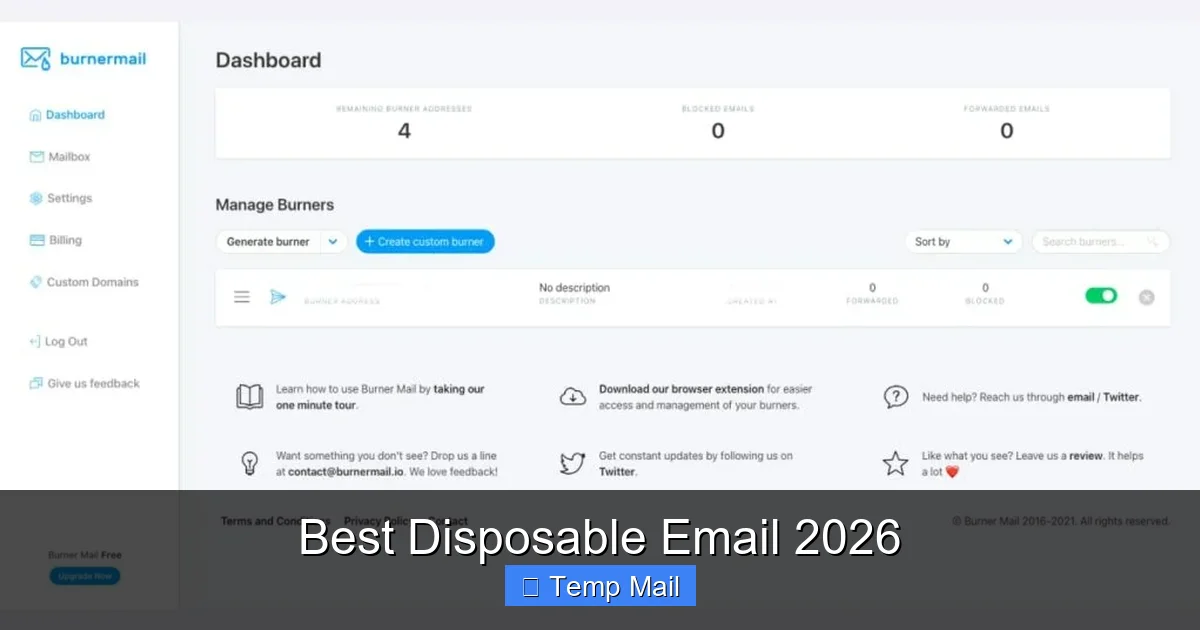
To cut through the marketing hype, we need a clear framework. Not every service is built for the same purpose. Here’s the rubric we use to judge the contenders for the title of “best disposable email 2026.”
Visual guide about Best Disposable Email 2026
Image source: blog.incogni.com
Reliability & Uptime
There’s nothing more frustrating than waiting for a verification email that never arrives because the service’s mail servers are down. The best services have robust infrastructure with high uptime. We test by generating an address and sending test emails from multiple providers (Gmail, Outlook, etc.) to ensure consistent delivery within seconds.
Inbox Lifespan & Flexibility
One-size-fits-all doesn’t work. Sometimes you need an inbox for 10 minutes to grab a PDF. Other times, you might need a day to complete a multi-step registration. Top-tier services offer a choice: 10-minute, 1-hour, or even 24-hour inboxes. Some even let you extend the time with a simple click before the timer hits zero.
User Experience & Ad Intrusiveness
This is a major differentiator. Many free services bombard you with pop-ups, misleading “download” buttons that are ads, and aggressive banners. The best disposable email platforms have clean, minimal interfaces. The inbox is the focus. Ads, if present, are clearly marked and non-deceptive. A good UX means you can copy your new email address and refresh the inbox with one click—no hunting around.
No Registration & Privacy Policy
The whole point is anonymity. You should never have to create an account, provide a phone number, or even set a password to use a disposable email. The service’s privacy policy should explicitly state that they do not store the contents of your received emails after deletion and have clear data retention logs for their own operations.
Advanced Features (The 2026 Edge)
Looking ahead, the best services are adding smart features. This includes:
- API Access: For developers and businesses to automate test email generation.
- Browser Extensions: One-click generation from a toolbar icon.
- Custom Domain/Address: Ability to choose a prefix (e.g., yourname@temp-domain.com) instead of a completely random string.
- Attachment Support: Receiving files (images, PDFs) up to a certain size.
- Email Forwarding: A rare but useful feature that forwards the disposable email to your main address for a limited time.
The Top Contenders: Best Disposable Email Services for 2026
Based on the criteria above, here are the services leading the pack. They represent a mix of established players and innovative newcomers likely to define the category in 2026.
Visual guide about Best Disposable Email 2026
Image source: blog.incogni.com
1. Temp-Mail: The All-Rounder Champion
Why it’s a top pick for 2026: Temp-Mail consistently ranks at the top for its exceptional balance of reliability, features, and clean interface. It’s the go-to recommendation for most users.
Key Features:
- Multiple domain options (e.g., @temp-mail.org, @tempmailo.com).
- Inbox timer with options for 10 minutes, 1 hour, or 1 day.
- One-click copy for both the email address and a “reply-to” address.
- Reliable inbox that refreshes automatically.
- Minimal, non-intrusive ads. A premium ad-free version is available.
- Browser extension for Chrome and Firefox.
Best For: Everyday use, signing up for forums, downloading resources, and general spam avoidance. It’s the most user-friendly and dependable option for the average person.
Practical Example: You need to download a gated industry report. You go to Temp-Mail, get an address like a8b3c9@tempmailo.com, use it to sign up, receive the PDF link, and then close the tab. The inbox vanishes an hour later. Zero spam to your real inbox.
2. 10MinuteMail: The Speed Demon
Why it’s a top pick for 2026: As the name implies, this service is laser-focused on ultra-short-term use. Its simplicity is its superpower, and it’s incredibly reliable for its core 10-minute mission.
Key Features:
- Strict 10-minute countdown timer (the classic).
- Extremely clean, no-frills interface—just the address and inbox.
- No registration, no fuss.
- Highly reliable for quick, single-task verifications.
Best For: The fastest possible sign-ups where you know the verification email will arrive instantly (e.g., activating a new software trial, a quick app login). It’s also great for testing if a website accepts disposable emails in the first place.
Tip: Have your next tab ready with the service you’re signing up for. The 10 minutes fly by!
3. Guerrilla Mail: The Veteran with Muscle
Why it’s a top pick for 2026: One of the oldest names in the game, Guerrilla Mail has earned its reputation through sheer longevity and added power-user features. It’s less “pretty” and more “functional.”
Key Features:
- Choose from dozens of domain names (e.g., @guerrillamail.com, @grr.la).
- Set your own inbox timer (from 1 hour to 1 day).
- Send emails from the disposable address (a rare feature).
- Password-protect your inbox (optional, adds a layer of privacy if someone else has the URL).
- Can be used to generate a “real” looking email for a specific purpose.
Best For: Users who need a bit more control, want to send a reply from the disposable address, or require a longer-than-average lifespan without signing up for anything.
Caution: The interface is more utilitarian and has more ads than Temp-Mail, but the functionality is undeniably robust.
4. MailDrop: The Minimalist’s Choice
Why it’s a top pick for 2026: If you hate ads and clutter, MailDrop is a breath of fresh air. It’s supported by donations and keeps things strikingly simple and clean.
Key Features:
- Completely ad-free interface (a huge plus).
- Inbox lasts for 24 hours.
- Simple, elegant design. Just the essentials.
- No frills, no distractions.
Best For: The privacy purist who wants the absolute minimum tracking and visual noise. Perfect for longer tasks that still don’t require a permanent address.
Note: Because it’s donation-supported, it can sometimes be slower to adopt new domains or features, but its core email reception is solid.
5. Looking Ahead: AI-Powered & Blockchain-Verified Services
By 2026, we expect a new wave of services to emerge. Imagine a disposable email that uses AI to:
- Pre-screen incoming emails for phishing links and warn you before you click, even in a temp inbox.
- Automatically categorize emails (e.g., “Verification,” “Newsletter,” “Spam”) within the temporary inbox.
- Suggest optimal inbox lifespans based on the website you’re visiting (via a browser extension).
Furthermore, services may integrate blockchain to provide verifiable, non-repudiable proof that a disposable email was used for a specific, time-bound purpose—useful for audit trails in professional testing scenarios without revealing a real identity. Keep an eye on privacy-focused tech startups for these innovations.
Practical Applications: When & How to Use Disposable Email
Knowing the best services is only half the battle. Using them correctly is what unlocks their true value. Here’s a practical guide to integrating disposable email into your digital routine.
Visual guide about Best Disposable Email 2026
Image source: blog.incogni.com
The Golden Rule: The “One-and-Done” Principle
A disposable email is for a single, defined task. Once that task is complete—you’ve verified the account, downloaded the file, accessed the content—you should abandon it. Do not use a disposable email for:
- Your primary bank, investment, or PayPal account.
- Your main social media profiles (Facebook, Twitter/X, Instagram).
- Any account where password recovery is essential. You will lose access forever.
- Official government or medical portals.
Perfect Use Cases Walkthrough
1. Gated Content & Lead Magnets: You see a fantastic ebook or webinar that requires an email. Use a disposable address. You get the content instantly. The marketer gets a lead. Your primary inbox gets nothing. It’s a win-win. Example: Downloading a “2026 Digital Marketing Trends” report from a marketing blog.
2. Forum & Comment Section Registration: Many online forums are spam magnets. Using a disposable email allows you to participate in a discussion without committing your main address to a potentially sketchy or poorly moderated community. If the forum turns toxic, you simply close the browser tab.
3. App & Software Trial Sign-Ups: That “free 14-day trial” for a project management tool doesn’t need your real email. Use a temp address. Complete the trial, decide if you like it, and if you do, you can consider upgrading with your real email later. This also stops the endless “Your trial is ending!” and “Come back!” promotional sequences.
4. Testing & Development: Are you a developer building a sign-up flow? Use disposable emails to automate test cases. Services with API access (like some 2026 contenders will have) let you script the creation of hundreds of test addresses to ensure your email verification system works correctly.
5. One-Time Online Purchases from New Vendors: Buying from a new, small online store for the first time? Use a disposable email for the order confirmation and shipping updates. If the store turns out to be spammy or you never want to hear from them again, the communication channel dies with the inbox.
Understanding the Risks & Limitations
Disposable email is a powerful tool, but it’s not a magic shield. Understanding its limitations is crucial for using it safely and effectively.
They Are NOT for Security-Sensitive Tasks
This cannot be stressed enough. A disposable inbox is not secure. The service provider could, in theory, read any email that passes through it (though reputable ones claim not to log content). Never, ever use a disposable email for:
- Password resets on important accounts.
- Two-factor authentication (2FA) codes.
- Financial transactions or banking correspondence.
- Any communication containing personal identification numbers (SSN, passport, etc.).
For these, your meticulously secured, 2FA-enabled primary email is the only choice.
Some Websites Block Them
Many popular platforms (Google, Apple, major social networks, banking sites) actively maintain blacklists of disposable email domains. They do this to reduce fraud and fake account creation. If you try to sign up with a temp address on such a site, you’ll get an error message. This is actually a good thing—it tells you the site is taking basic security measures. For sites that accept them, it’s a sign they are less stringent about user authenticity, which is exactly why you’d use a temp mail there.
No Long-Term Access, No Exceptions
The inbox is gone. The emails are gone. If you need to access an account months later, you will be locked out. Always ensure you have a legitimate, permanent recovery method (a real email or phone number) attached to any account you create with a disposable address, if the platform allows it. For pure content access, this isn’t an issue.
Potential for Abuse & Reputation Damage
Because they are anonymous, disposable emails are sometimes used for abuse—sending spam, making fraudulent posts, etc. This can occasionally lead to the entire domain being flagged. If you’re using a disposable address on a reputable forum and your posts get flagged, you might get banned based on the email domain alone, not your behavior. It’s a small but real risk of collateral damage.
The Future is Now: Trends Shaping Disposable Email in 2026
What will the best disposable email services look like in 2026? They are already evolving beyond simple inbox generators. Here are the key trends to watch.
Integration with Broader Privacy Suites
Disposable email won’t exist in a vacuum. Expect to see it seamlessly integrated into:
- Privacy-Focused Browsers: Brave or Firefox may have built-in temp mail generation in the address bar.
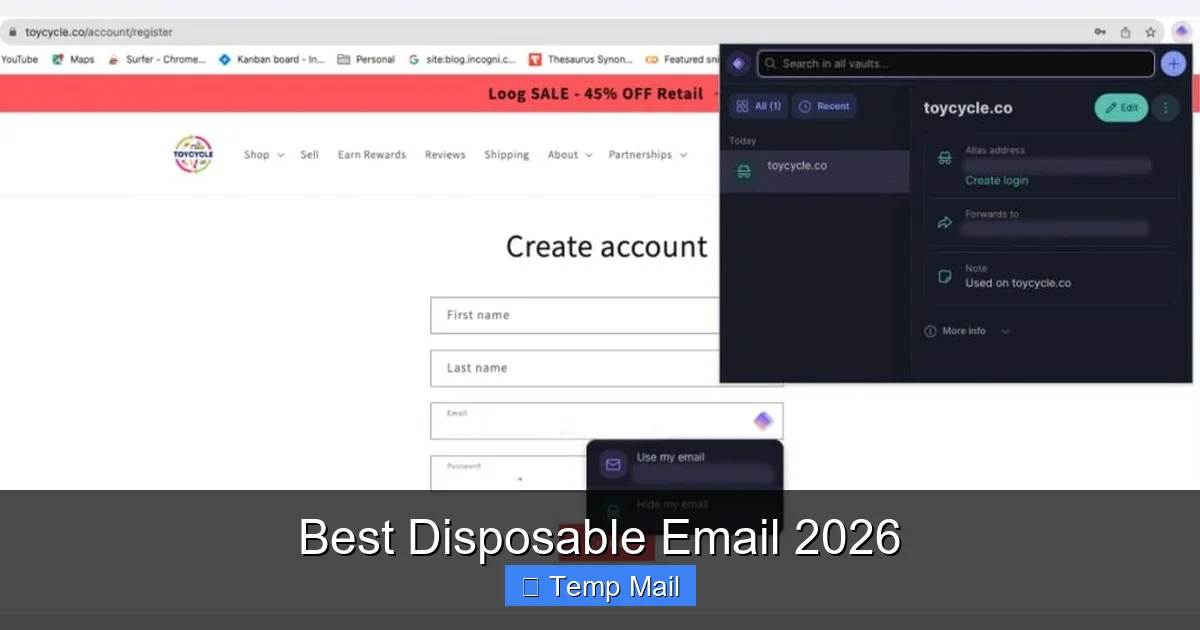
- Password Managers: 1Password or Bitwarden might offer a “generate disposable email” button alongside the password generator when filling a sign-up form.
- VPN Services: Your VPN provider might bundle a premium temp mail service as part of the subscription, creating a complete anonymity package (masked IP + masked email).
Smarter, Context-Aware Generation
With user permission (via a browser extension), a 2026 disposable email service could analyze the page you’re on and suggest an appropriate inbox lifespan. Signing up for a news site? It might suggest a 1-hour inbox. Downloading a software suite? Maybe a 12-hour one. It could also auto-fill the generated address into the web form for you.
Enhanced Verification & Anti-Phishing
Future services might partner with threat intelligence feeds. If an email arrives in your temporary inbox containing a known phishing link, the service could display a prominent, non-dismissible warning banner before you even click it. This turns the disposable inbox from a passive receiver into an active defense layer.
The “Verified Disposable” Niche
A counter-intuitive trend: services that offer “verified” disposable emails. How? You might prove you’re a human (via a CAPTCHA) or have a minimal, non-personal interaction with the service to “earn” a more reliable, less-blacklisted domain address. This creates a tiered system where the most trustworthy temp domains are reserved for users who engage minimally with the provider, reducing abuse and improving deliverability.
Conclusion: Your Inbox, Your Rules
The best disposable email service for you in 2026 isn’t about finding one single “winner.” It’s about matching the tool to the job. For most people, Temp-Mail represents the ideal blend of ease, reliability, and features. For the speed-obsessed, 10MinuteMail is unbeatable. For power users who need to send from the temp address, Guerrilla Mail still holds the crown. And for the minimalist who hates ads, MailDrop is a sanctuary.
The central lesson is this: your primary email address is a valuable asset. Guard it jealously. Use disposable emails as your first line of defense against the relentless tide of promotional noise and potential security threats that define the modern web. By consciously choosing the right temporary inbox for each non-critical interaction, you reclaim control. You decide who gets access to your digital doorstep and for how long. As we move into 2026, these tools will only become smarter and more integrated, making privacy not just a goal, but a simple, automated part of your everyday browsing. Start using one today—it’s one of the easiest, most impactful privacy habits you can build.
Frequently Asked Questions
Are disposable email services safe to use?
For their intended purpose—receiving verification emails for non-critical accounts—they are generally safe. However, you should never use them for sensitive transactions, banking, or primary account recovery, as the inbox is not secure and emails are permanently deleted.
How long do disposable emails typically last?
It varies by service. Common lifespans are 10 minutes, 1 hour, or 24 hours. Some services allow you to extend the time manually. Always check the timer before using one to ensure it meets your needs.
Can I send attachments with a disposable email?
Some advanced services, like certain versions of Guerrilla Mail, allow receiving small attachments (e.g., images, PDFs). Most basic disposable email services are designed only for text-based verification emails and do not support file attachments.
What’s the difference between a disposable email and a VPN?
They protect different things. A VPN masks your IP address and encrypts your internet traffic, hiding your physical location and network activity. A disposable email masks your actual email address, protecting your identity and inbox from spam. They are complementary privacy tools.
Can businesses use disposable emails?
Yes, but carefully. Businesses can use them for software testing (QA), creating test accounts in their own systems, or signing up for competitor research. They should never be used for official customer communication, billing, or legitimate user accounts.
Why is the “best disposable email 2026” a relevant search now?
The landscape is changing rapidly with new privacy laws, AI-driven spam, and user awareness. Searching for the best service for 2026 helps you identify providers that are actively innovating, investing in infrastructure, and building features (like API access or extensions) that will be standard in the near future, ensuring you choose a tool that won’t become obsolete.