Disposable Email Address
A disposable email address is a temporary, anonymous inbox you use once or twice to avoid giving out your primary email. It’s the perfect tool for signing up to websites, downloading files, or accessing content that might trigger spam, all while keeping your real identity and main inbox safe and clutter-free. Think of it as a burner phone for your digital life—use it, discard it, and never look back. This guide covers everything you need to know, from how they work to best practices for staying secure.
Key Takeaways
- Primary Purpose: Disposable emails are designed for one-time or short-term use to shield your primary email from spam, data breaches, and unwanted marketing.
- No Account Needed: Most services generate a random inbox instantly; you simply copy the address and use it, with no registration or password required.
- Limited Lifespan: These inboxes automatically delete after a set time (e.g., 10 minutes to 24 hours) or once you close the browser tab, ensuring no long-term digital footprint.
- Not for Critical Accounts: Never use them for banking, primary social media, or any account where recovery and long-term access are essential.
- Security Trade-off: While great for privacy from marketers, the content is often publicly accessible on the service’s server, so never use them for sensitive personal or financial information.
- Two Main Types: There are simple “receive-only” addresses and more advanced “forwarding” disposable addresses that send mail to your real inbox for a limited time.
- Ethical Use: They are legal and ethical tools for privacy protection, but should not be used to evade legitimate website terms of service or for fraudulent activities.
[FEATURED_IMAGE_PLACEHOLDER]
📑 Table of Contents
- What Exactly Is a Disposable Email Address?
- How Do Disposable Email Services Actually Work?
- The Major Benefits: Why You Should Consider Using One
- Important Drawbacks and Critical Limitations
- Common and Smart Use Cases for Disposable Emails
- Security and Privacy: What You Need to Know
- Best Practices and How to Choose a Service
- The Future of Disposable Email and Digital Identity
- Conclusion: A Simple Tool for a Complex Problem
What Exactly Is a Disposable Email Address?
Let’s start with the core concept. A disposable email address, often called “temp mail” or a “burner email,” is a temporary email inbox that exists for a very short period—sometimes just 10 minutes, sometimes up to a few days. Its sole purpose is to act as a shield between your permanent, personal email address and the outside world.
Imagine you’re walking through a crowded mall and someone asks for your home address to send you a free sample. You’d probably hesitate. Online, it’s the same feeling millions have every day when a website demands an email just to read an article or download a PDF. Your email is a key to your digital identity. It’s linked to your bank accounts, social media, work, and personal contacts. Handing it out willy-nilly is like giving your house keys to every stranger you meet.
The “Burner” Analogy
The term “burner” comes from prepaid phones you buy, use, and throw away. A disposable email works the same way. You get a random address like random123@tempmail.service. You use it to sign up for that sketchy forum or get that e-book. Any emails sent to that address appear in a public, web-based inbox linked to that address. Once you’re done, or once the time limit expires, the address and all its emails vanish into the digital ether. No trace, no clutter in your real inbox.
How Do Disposable Email Services Actually Work?
The mechanics are beautifully simple, which is why they’re so popular. There’s no complex setup. Here’s the typical user journey:
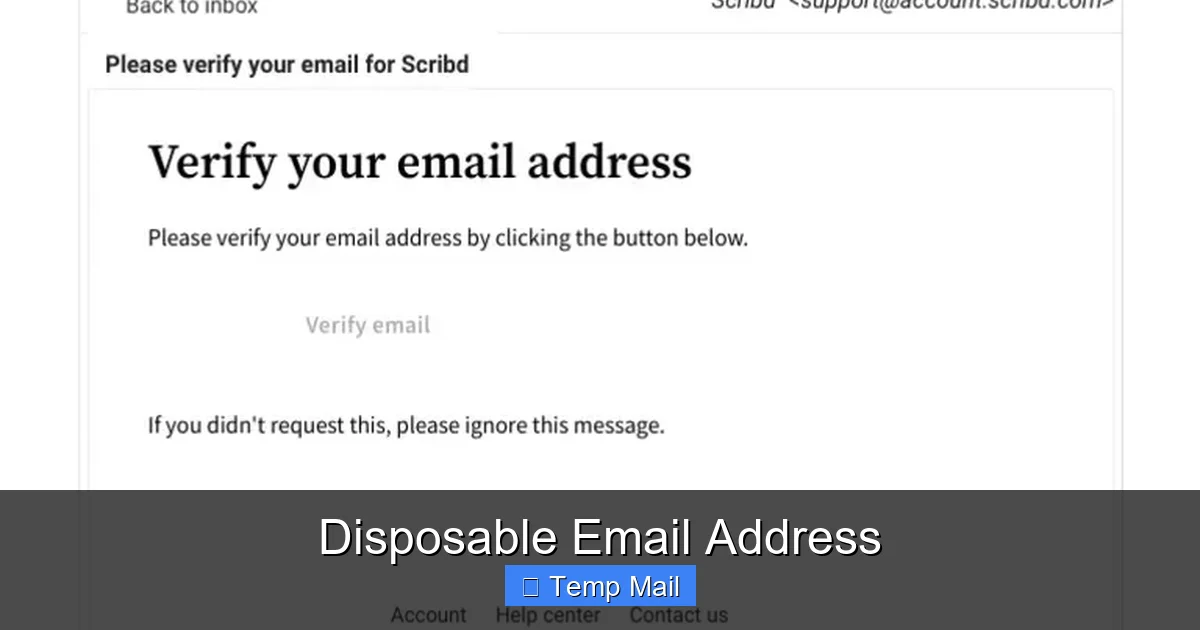
Visual guide about Disposable Email Address
Image source: devdude.com
- Visit a Temp Mail Site: You go to a website like Temp-Mail.org, 10MinuteMail.com, or Guerrilla Mail.
- Get Your Address: The site instantly generates a random email address for you, often with a random inbox already open in your browser. You don’t choose the username; it’s assigned.
- Use It: You copy that address and paste it into the website or service that’s asking for your email.
- Check the Inbox: You keep the temp mail site’s tab open. When the service sends a confirmation email or a download link, it appears right in that open inbox.
- Discard: Once you’ve received what you needed, you simply close the tab. The address is now dead. Many services also auto-delete the inbox after a set time (10 minutes, 1 hour, 1 day).
The Technology Behind the Curtain
These services run their own mail servers. When they generate abc123@disposable.com, they configure their server to accept all mail for that address and store it in a temporary database linked to your browser session (often via a unique session ID). There’s no password protection for the inbox because the idea is that only the person who has the specific browser tab open (or the exact, hard-to-guess URL) can access it. It’s security through obscurity and extreme temporariness.
The Major Benefits: Why You Should Consider Using One
Using a disposable email address isn’t about being paranoid; it’s about being pragmatic. The benefits are significant for the modern internet user.
Visual guide about Disposable Email Address
Image source: optery.com
1. Spam and Junk Email Annihilation
This is the number one reason. Every time you sign up for a newsletter, a discount, or a freebie with your primary email, you’re signing up for potential spam. Companies sell email lists. Even reputable companies get hacked, and your email ends up in spam databases. A disposable email address is a sacrificial lamb. Let the spam go there. When the address dies, so does all the spam it would have attracted. Your real inbox stays pristine.
2. Enhanced Privacy and Anonymity
Want to read a controversial article, join an anonymous forum, or research a competitor without leaving a trail? Using a temp mail severs the direct link between that online activity and your real identity. It prevents websites from building a profile based on your primary email address. This is crucial for journalists, activists, researchers, or anyone in a sensitive situation.
3. Simplified Account Creation and Testing
Ever needed to test a software sign-up flow or create a dummy account to explore a website’s features? Using your real email is messy and creates permanent, unused accounts. A disposable address lets you create as many test accounts as you need, all of which self-destruct. Developers and QA testers love this.
4. Bypassing Paywalls and Gated Content
Many sites ask for an email to “unlock” an article, whitepaper, or tool. If you trust the site but don’t want the long-term relationship, a temp mail is perfect. Get the content, the address expires, and you get no follow-up marketing emails.
5. Protection from Data Breaches
When a company you signed up with suffers a data breach, your email address is one of the first pieces of data hackers steal. If you used a disposable email for that service, the breached email is useless to them after a few hours. Your primary email and its associated accounts remain safe.
Important Drawbacks and Critical Limitations
Disposable emails are powerful, but they are not a magic bullet. They have serious limitations you must understand before using them.
Visual guide about Disposable Email Address
Image source: optery.com
1. They Are Not Secure for Sensitive Information
This is the golden rule. Never use a disposable email for:
- Banking or financial accounts
- Primary social media profiles
- Work or school accounts
- Any service where account recovery is vital
- Communications containing passwords, SSNs, or confidential data
The inboxes on these services are often not encrypted. The provider can, in theory, read any email that passes through. The whole point is anonymity from the *sender*, not necessarily from the *service provider*. Assume anything sent to a disposable address could be seen by the service’s operators.
2. No Long-Term Access or Recovery
By design, you cannot recover a disposable email. If you need to reset a password for an account you signed up with a temp mail a week later, you are locked out forever. The account is lost. This makes them useless for any service you might need to access again.
3. They Are Often Blocked by Major Platforms
Google, Microsoft, Facebook, and many other major platforms actively block known disposable email domains from being used for sign-up. They see them as a fraud and spam risk. So, you can’t use them to create a Gmail account or a Facebook profile. They are meant for low-stakes, non-critical websites.
4. Potential for Abuse and Blacklisting
Because they are anonymous, disposable emails are frequently used for spam, fraud, and abuse. This means the domains themselves can get blacklisted by legitimate email providers (like Gmail or Outlook). If you use a disposable address to sign up for a service, the confirmation email might never arrive because Gmail rejected it as coming from a blacklisted domain.
Common and Smart Use Cases for Disposable Emails
Knowing *when* to use a disposable email is as important as knowing how. Here are the perfect scenarios.
Downloading Gated Content (E-books, Whitepapers, Templates)
You see a great “10 Free Marketing Templates” PDF. The site wants an email. Use a disposable one. Download the file. Close the tab. No clutter, no newsletter you’ll ignore.
Signing Up for One-Time Promotions or Discounts
That 20% off coupon for a store you’ll probably never shop at again? Use the temp mail. The promotional emails will die with the address.
Registering on Forums or Comment Sections
You want to post a comment on a news article or ask a question on a technical forum. Many require login. Create a disposable identity for that one comment or question. No need to link it to your real self.
Testing Online Tools and Services
As a developer or power user, you want to test how a SaaS tool handles sign-up, email verification, and onboarding flows. Create 10 test accounts with 10 different disposable emails. Clean, simple, and free.
Accessing Wi-Fi Hotspots
Some public Wi-Fi networks (in airports, hotels) require you to enter an email to get the password or accept terms. Use a disposable address. You get online; they get an email that will bounce in an hour.
Researching Sensitive Topics
If you’re researching a personal health issue, a legal matter, or a controversial topic, using your primary email can skew the search results and ads you see (and create a permanent record). A disposable email helps maintain a cleaner, more anonymous research session.
Security and Privacy: What You Need to Know
We touched on this, but it deserves its own deep dive. The security model of a disposable email is unique and comes with trade-offs.
Encryption (or Lack Thereof)
Most free disposable email services do not use end-to-end encryption. The emails are stored in plain text on their servers. While the connection to their website *might* be HTTPS (look for the padlock), the stored emails themselves are not encrypted at rest. This means if their server is hacked, all the temporary emails are exposed. For your average spam-protection use, this is an acceptable risk. For anything private, it is not.
Data Retention and Logging Policies
Reputable services will state they delete emails immediately upon expiration or when the inbox is closed. However, you are trusting their word. They could, in theory, log IP addresses or keep archives. Always check the privacy policy of the specific service you use. The best ones are transparent about immediate deletion.
The “Public Inbox” Risk
Because the inboxes are often accessible just by knowing the random address (or by being on the same site), there is a small risk someone could guess or brute-force an active disposable address and read your emails. This is why you should never, ever use them for anything sensitive. The “security” is in the address’s randomness and short lifespan, not in a password lock.
Choosing a More Secure Option: Forwarding Services
Some services, like SimpleLogin or AnonAddy (which have free tiers), offer a different model. You create an account with them (using a strong password) and they generate unique, random forwarding addresses for you. When an email is sent to the random address, it is securely forwarded to your *real*, primary inbox. You can disable or delete the forwarding alias at any time from your dashboard. This offers much better security and control while still providing the core benefit of address masking. It’s the premium, more secure option for regular users.
Best Practices and How to Choose a Service
To use disposable email effectively and safely, follow these guidelines.
Do’s:
- DO use them exclusively for non-critical, one-off sign-ups and content downloads.
- DO close the browser tab as soon as you’ve received the necessary email. Don’t let it sit open.
- DO stick to well-known, reputable services. A quick search for “best temp mail” will show commonly used ones.
- DO consider a forwarding-based alias service (like SimpleLogin) for slightly more important but still non-critical uses (e.g., signing up for a newsletter you might actually want but don’t trust).
- DO assume the service can read any email sent to the disposable address. Never put secrets in them.
Don’ts:
- DON’T use them for any account you need to log into regularly or recover.
- DON’T use them for professional or academic purposes.
- DON’T expect them to work on major platforms like Google, Apple, or Facebook.
- DON’T use them to try to circumvent a website’s paid subscription model or terms of service. That’s unethical and often illegal.
- DON’T rely on them as your only privacy tool. Use a good password manager, enable 2FA, and be mindful of what data you share overall.
How to Evaluate a Temp Mail Service
When picking a service, look for: a clear domain name (not a confusing subdomain), a simple interface that shows your inbox immediately, a stated expiration time (10 min, 1 hour, 1 day), and a privacy policy that mentions immediate deletion. Avoid services that bombard you with ads or look overly suspicious. The best ones are clean, fast, and functional.
The Future of Disposable Email and Digital Identity
The rise of disposable email is a symptom of a larger problem: our email address has become an overburdened, universal key. It’s used for login, communication, marketing, and recovery. This single point of failure is why privacy tools like this are so valuable.
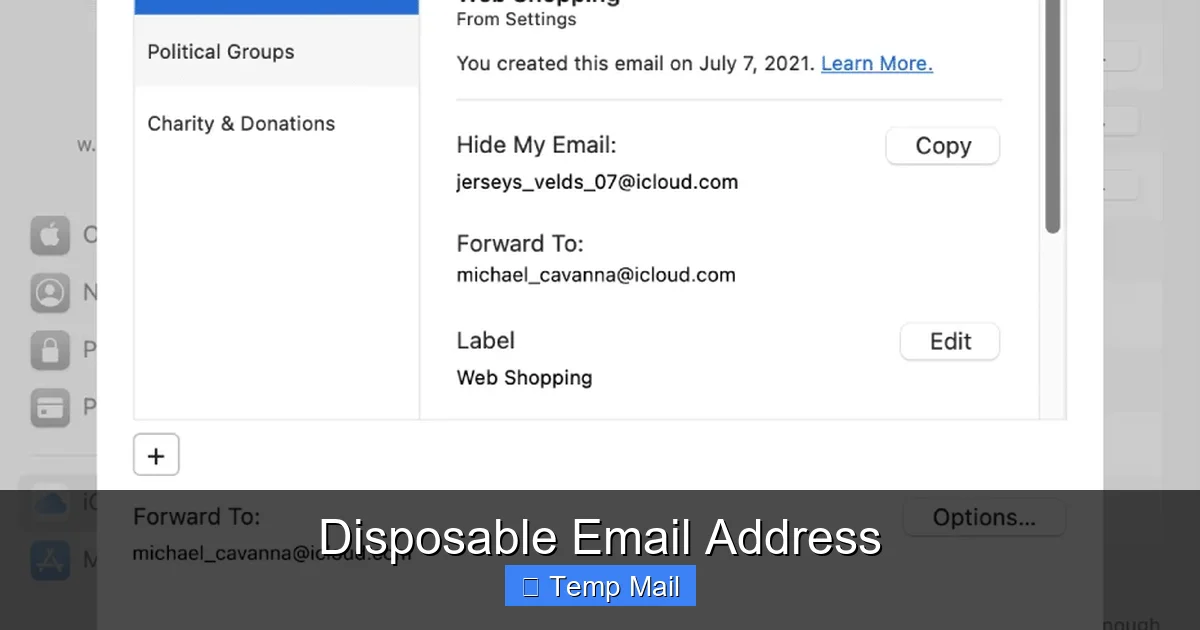
We are seeing a shift. Password managers now often include email masking features (like 1Password’s “Masked Email” and Apple’s “Hide My Email”). These are integrated, secure, and often use the forwarding model. They represent the next evolution: disposable-like addresses that are more robust, secure, and managed within your trusted ecosystem.
Regulations like GDPR and CCPA have also forced companies to be more responsible with our data, but the onus is still on the user to protect their primary contact point. A disposable email address will remain a vital, low-tech tool in the privacy toolkit for the foreseeable future. It’s a simple, effective way to draw a line in the sand between your real digital life and the noisy, data-hungry web.
Conclusion: A Simple Tool for a Complex Problem
In a world where your email address is constantly sought after, sold, and exploited, taking control is essential. A disposable email address is one of the easiest, most accessible forms of digital self-defense. It’s not for everything—your bank, your main social media, and your work must always use your real, secure, recoverable email. But for the thousands of minor interactions we have online every year that require an email but don’t deserve our trust, a temp mail is perfect.
Use it wisely. Understand its limits. Never put anything sensitive in it. By adopting this simple habit—reaching for a disposable address before your primary one—you will dramatically reduce spam, minimize your data breach exposure, and reclaim a small but significant piece of your online privacy. Start today. The next time a pop-up asks for your email, ask yourself: “Is this worth my real address?” If the answer is no, you now know exactly what to do.
Frequently Asked Questions
Is using a disposable email address legal?
Yes, using a disposable email is completely legal. It’s a standard privacy and security tool. It becomes illegal only if you use it to commit fraud, evade legal obligations, or violate a website’s specific terms of service (which some sites prohibit). For general privacy protection, it is 100% legal and ethical.
Are disposable emails safe from hackers?
They are safe in the sense that they are temporary and isolate your primary email from breaches. However, the inboxes themselves on free services are generally not encrypted and may be publicly accessible. Therefore, they are not “safe” for receiving sensitive information like passwords or financial details. Their safety is about protecting your main identity, not securing confidential communications.
Can I use a disposable email for Gmail or Facebook sign-up?
Almost certainly not. Major platforms like Google, Facebook, Apple, and Microsoft actively block known disposable email domains during account creation to prevent spam and fake accounts. You must use a permanent, verifiable email address for these essential services.
What happens to emails sent to a disposable address after it expires?
They are permanently and automatically deleted from the service’s servers. Once the expiration timer runs out or you close the browser session (depending on the service), the address is recycled and all associated emails are purged. There is no way to recover them.
Can I forward emails from a disposable address to my real inbox?
With basic “receive-only” disposable services, no—you must check the public inbox directly. However, more advanced “email alias” or “forwarding” services (like SimpleLogin or AnonAddy) create a unique disposable address that automatically forwards all incoming mail to your permanent inbox, and you can delete the alias at any time.
Should businesses use disposable emails for customer communication?
Absolutely not. Businesses must use a permanent, branded domain (e.g., @yourcompany.com) for all customer communications. Using disposable emails would appear unprofessional, harm deliverability (as the domains are often blacklisted), and destroy customer trust. Disposable emails are strictly for individual, non-critical, inbound use.